What Is a Genuine Hand Painted Oil Painting? A Beginner Friendly Buyer’s Guide
If you’ve ever scrolled through pages of “canvas art” and felt confused, you’re not alone. Some listings say “hand-painted,” others say “giclée,” and some mention “texture” without explaining what that really means.
You probably don’t want to spend money on something that looks cheap in person or buy a “painting” that turns out to be a flat print with a few brushstrokes on top.
This guide is for you if you’re just starting to think about buying “real” art for your home or office and want clear, practical advice. We’ll walk through what a genuine hand painted oil painting is, how it changes the feel of a room, how to tell it apart from prints, and how to choose the right style for your space.
By the end, you should feel more confident reading product listings, spotting red flags, and deciding when hand painted oil paintings (like ours) make sense for you.
What a Genuine Hand Painted Oil Painting Really Is?
What Counts as a Genuine Hand Painted Oil Painting?
Let’s strip away the jargon.
A genuine hand painted oil painting means:
-
An artist used real oil paints
-
On a real canvas (usually cotton or linen stretched on wooden bars)
-
And painted it by hand, layer by layer not printed by a machine
In other words, you’re buying an actual painting, not a photograph of a painting.
The key question: Did an artist create the image with a brush and oil paints directly on canvas? If yes, it’s a genuine hand-painted oil on canvas painting.

How a Hand Painted Oil Painting Is Made?
Here’s a simplified version of how a painting in hand painted canvas oil paintings is created:
1. Preparing the canvas
The artist stretches canvas over a wooden frame and primes it so the paint goes on smoothly and lasts.
2. Sketching the design
They lightly mark out the composition where large shapes, lines, or figures will go.
3. Blocking in colors
Broad areas of color are applied first to set the mood and structure.
4. Building layers and texture
Oil paint is often applied in several layers. This is where you get those thick brushstrokes and texture you can actually feel.
5. Details and finishing touches
This process takes time, skill, and judgment, which is why genuine hand-painted pieces feel more alive than mass-produced prints.
What “Original,” “Reproduction,” and “Limited Edition” Actually Mean for Hand-Painted Art?
These terms can be confusing, so here’s a simple breakdown:
-
Original
A one-of-a-kind painting created by the artist. There is only one.
-
Reproduction (hand-painted)
An artist paints a new piece based on an existing design or artwork. It’s still hand-painted, but the design is repeated.
Many of our popular texture art and abstract art designs are hand-painted reproductions, so you get real brushstrokes at a more accessible price.
-
Limited Edition
Only a certain number are produced. This can apply to prints or paintings.
-
A limited edition print is still a print.
-
A limited-edition hand-painted piece means each one is painted individually.
-
When you shop, your main question is: “Is this physically painted with oil on canvas, or is it printed?” The terms above are helpful, but they don’t replace that core distinction.
Why It Matters: How Hand-Painted Art Changes the Feel of Your Room?
Texture, Depth, and Light in a Real Hand Painted Oil Painting
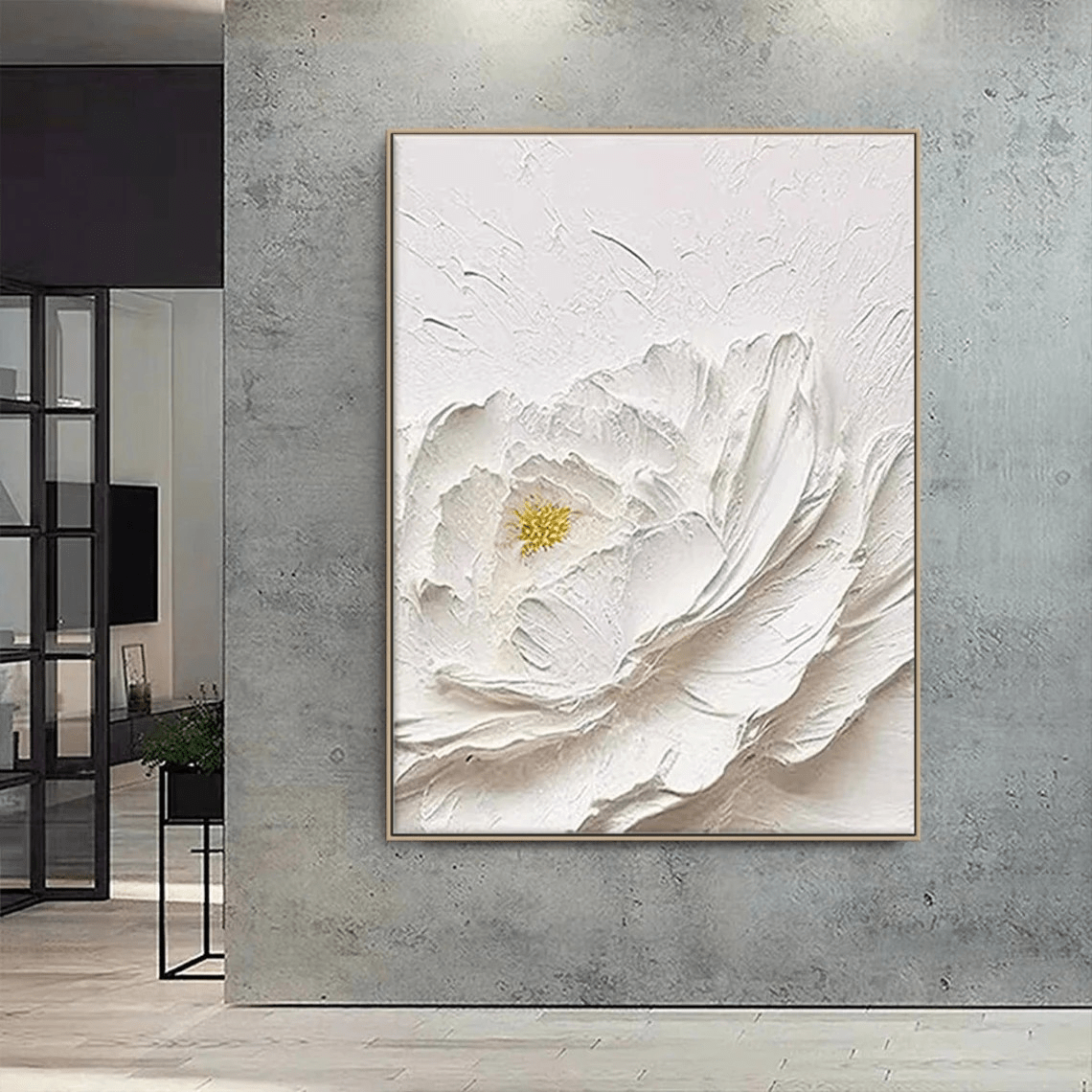
When you hang a real oil painting, you’re not just adding color, you’re adding texture and depth.
Because oil paint sits on top of the canvas in layers, you’ll see:
-
Brushstrokes that catch the light differently as you move
-
Slight shadows where the paint is thicker
-
A subtle sheen that feels rich, not shiny like plastic

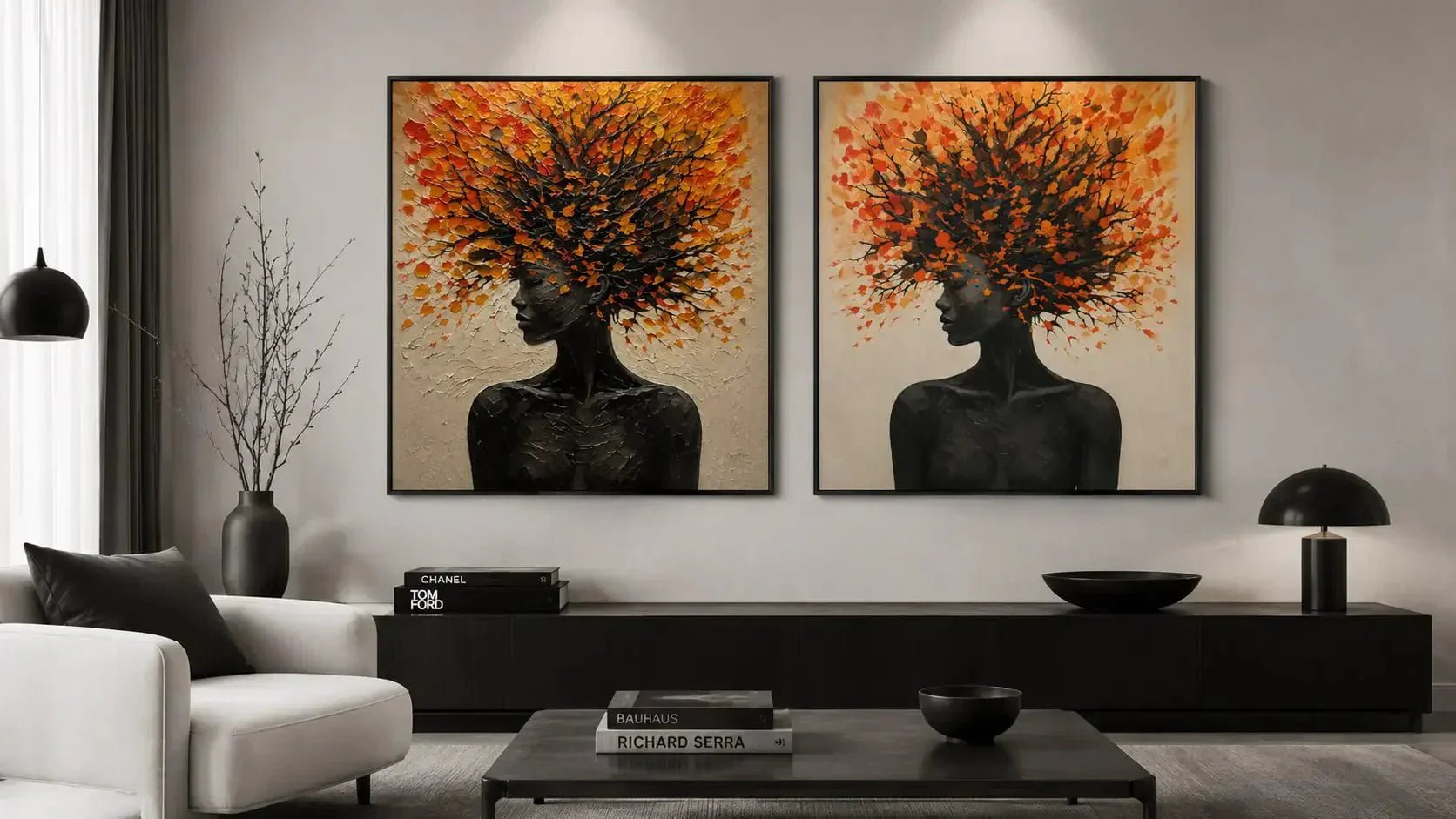
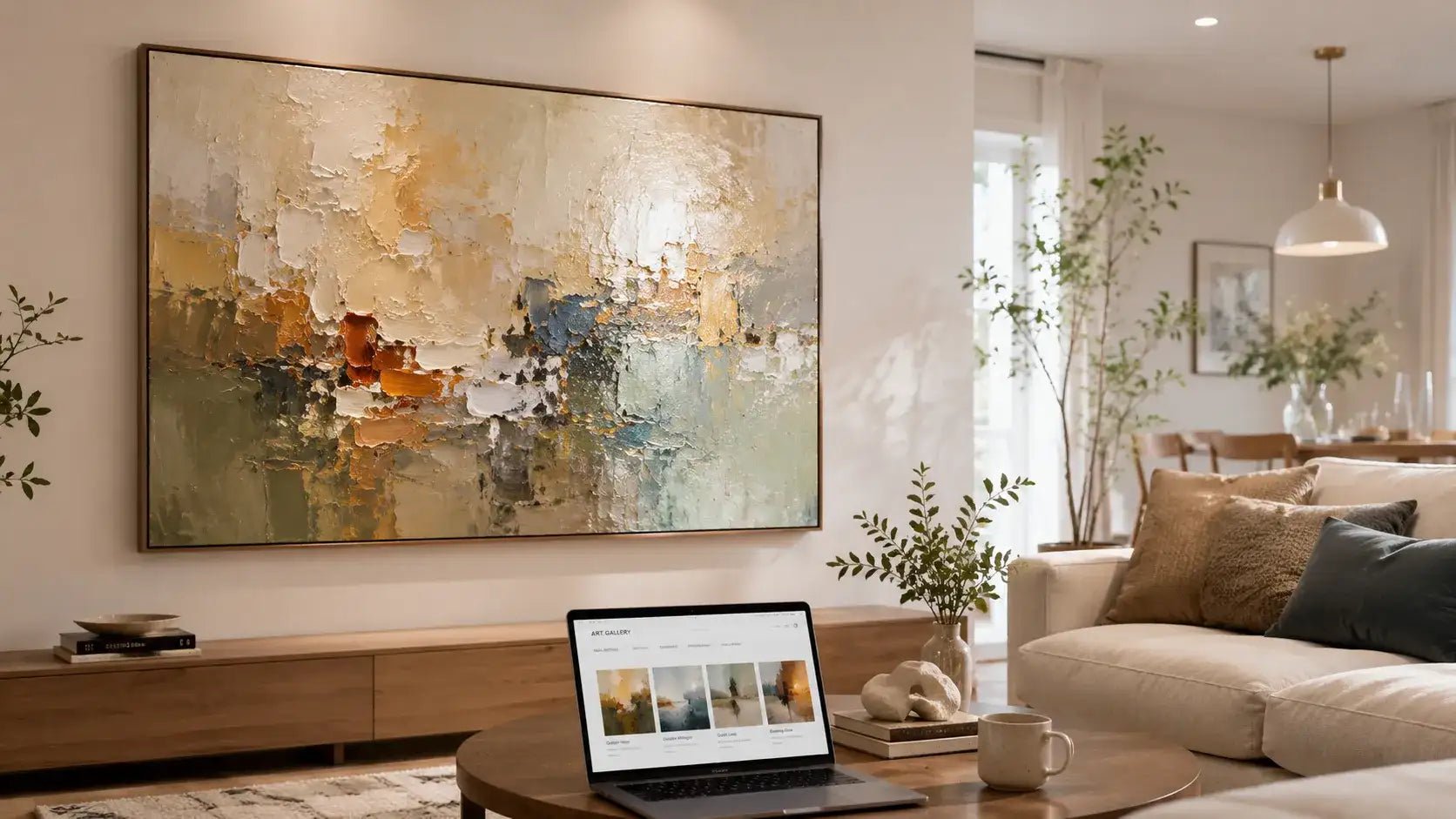
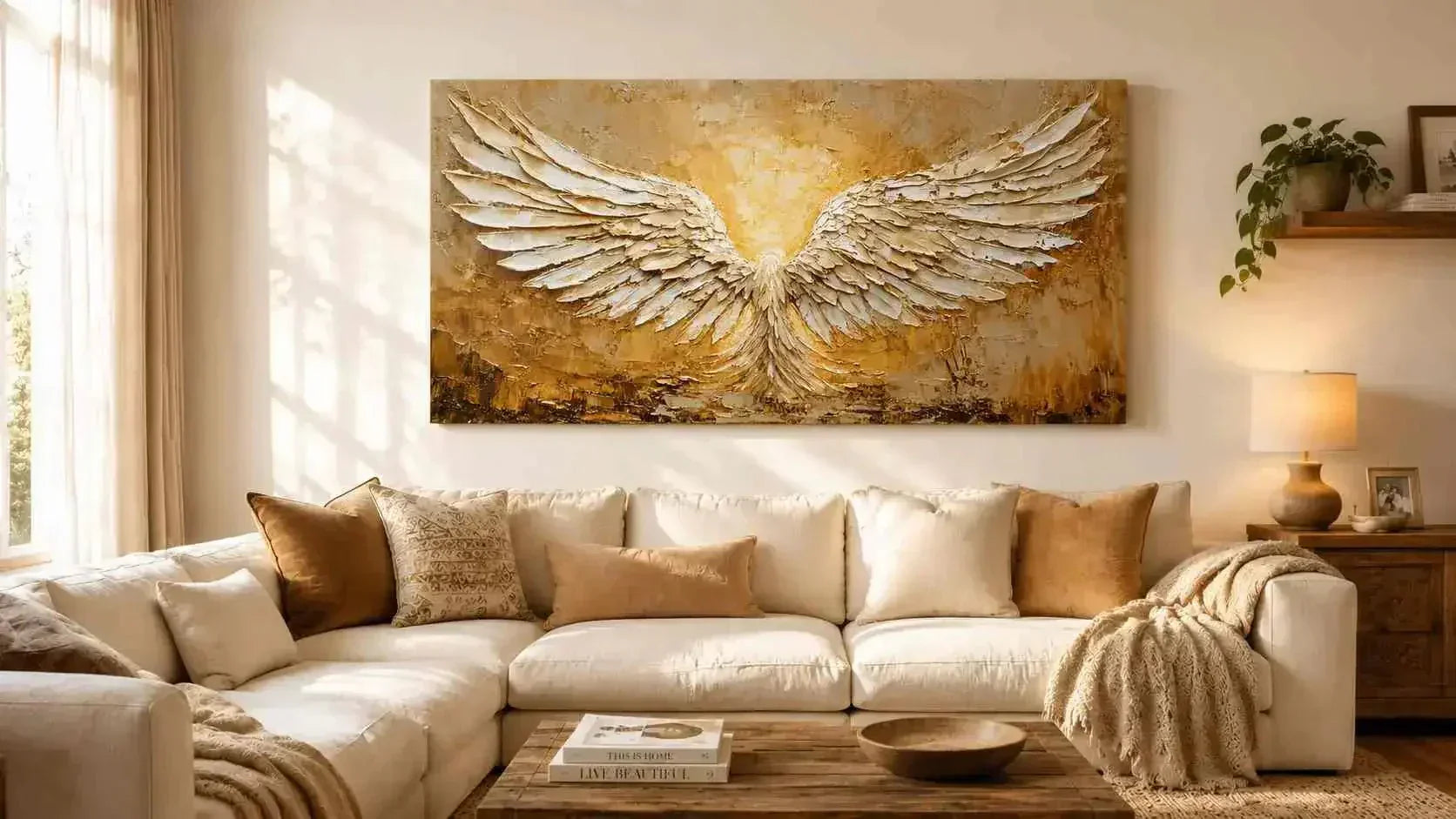
For example, a textured abstract painting above your sofa can make a simple living room feel more elevated and “designed,” even if the rest of your furniture is basic.
A print can show the image, but it can’t replicate that physical dimension.
Uniqueness vs “I’ve Seen That Everywhere”
Mass-market prints are everywhere: big-box stores, discount websites, and generic office lobbies.
There’s nothing wrong with prints for temporary decor, but if you’ve ever walked into a friend’s house and seen the exact same piece you bought last month, you know the feeling.
With hand painted oil paintings:
-
Even if the design is repeated, each piece has small differences in brushstrokes, edges, and tiny variations.
-
Your walls don’t look like they came from the clearance aisle.
This is especially true with abstract, texture, and Wabi Sabi paintings; the nature of the brushwork means no two are exactly alike.
Why Hand Painted Oil Paintings Age Better Than Disposable Decor?
Good oil paintings are made to last:
-
Oil paint, once cured, is durable and stable.
-
Canvas can be re-stretched or re-framed if needed.
Instead of buying cheap wall prints every year and tossing them out, you can invest in a few hand-painted pieces that move with you from one home or office to the next.
Hand-Painted vs Canvas Prints vs Hand-Embellished: The Real Differences
Canvas Print, Giclée, and Hand-Embellished Print: Quick Definitions
You’ll see these terms a lot:
-
Canvas print
A digital image printed onto canvas using a printer. No hand painting required.
-
Giclée print
A high-quality inkjet print on canvas or paper. It can look very sharp and colorful, but is still a print.
-
Hand-embellished print
A canvas print with some texture or brushstrokes added on top. Parts are painted by hand, but the underlying image is printed.
In all three cases, the base image is produced by a machine. That’s the key difference from a fully hand painted oil painting.
How do Hand Painted Oil Paintings vs Prints Look and Feel in Real Life?
Stand about a foot away and ask yourself:
-
Do I see pixels or tiny dots if I look very closely? → That’s a print.
-
Is the surface even and flat across the whole image? → Likely a print.
-
Do the brushstrokes seem to follow the shapes and colors naturally, with some thicker and some thinner? → More likely to be hand-painted.
With genuine hand painted oil paintings, you’ll see:
-
Slight unevenness in texture
-
Visible strokes that match the image
-
Tiny imperfections that signal a human touch
Print vs Hand-Painted: Pros and Cons
Prints can be perfectly fine for:
-
Very tight budgets
-
Temporary spaces (dorms, short-term rentals)
-
Rooms where art is less important, like a rarely used hallway
Hand painted oil paintings are usually worth it when:
-
The piece is a focal point (above a sofa, bed, or in an entryway)
-
You want your home or office to feel more personal and elevated
-
You care about texture, uniqueness, and long-term value
Think of prints as the “fast fashion” of wall art and hand-painted oil as a well-made staple piece you’ll keep for years.
How to Tell If a Painting Is Truly Hand-Painted Online?
Step 1 – Study the Photos
When shopping online, the photos are your best friend. Look for:
-
Close-up images that show brushstrokes
-
Angled shots where you can see light reflecting off the texture
-
Variations in the thickness of the paint
If every photo looks perfectly flat, like a poster, and there are no close-ups of texture, be cautious.
Step 2 – Check the Canvas Edges
Genuine hand painted oil paintings often show:
-
Paint wrapping around the canvas edges
-
Slightly uneven lines or edges are a good sign of handwork
If the seller provides side views or photos of the painting hanging on a wall, zoom in on the edges. If they look like a printed photograph right up to the edge, it may be a print.
Step 3 – Read the Description Carefully
Look for clear, specific language like:
-
“100% hand-painted”
-
“Oil on canvas”
-
“Painted by hand with oil paints”
Be cautious with vague phrases like:
-
“Canvas wall art” (alone, this doesn’t guarantee painting)
-
“Printed painting”
-
“Art print”
A trustworthy listing will say directly that the artwork is a hand painted oil on canvas painting if that’s what it is.
Step 4 – Look for Materials and Technique Details
Details add credibility. Check if the listing mentions:
-
Canvas material (e.g., “100% cotton canvas”)
-
Oil paints versus “inks” or “pigments.”
-
Whether the painting is stretched on wooden bars or arrives rolled
If a listing is very vague about materials, it’s a sign to dig deeper or move on.
Step 5 – Ask If You’re Unsure
If you’re still not sure, send a quick message to the seller. You can ask:
-
“Is this a fully hand painted oil painting, or is it a print with some texture added?”
-
“Are any parts of the image printed, or is everything painted by hand?”
-
“Can you share a close-up photo of the brushstrokes?”
A reputable gallery or seller should be happy to clarify. If you get a confusing or evasive answer, that tells you something, too.

Quick Buyer Checklist: 10 Things to Check Before Buying Hand-Painted Art
Use this as a screenshot or note on your phone when you shop for hand painted oil paintings.
The Product Listing Essentials
Before anything else, check:
-
Does the title or description clearly say “hand-painted”?
-
Does it mention “oil on canvas” (not just “canvas art”)?
-
Are there multiple photos, including close-ups?
-
Is the size clearly listed (height x width, in inches)?
If any of these are missing, pause and investigate.
Quality & Authenticity Checks
Next, look for signs of real painting quality:
-
Visible brushstrokes and texture in close-up photos
-
Slight variations or imperfections that show a human hand
-
Information on canvas and paint (cotton canvas, oil paint, etc.)
-
Clear distinction between hand-painted and any print products they also sell
If everything is strangely perfect, flat, and generic-sounding, it may not be what you think.
Practical Buying Factors
Finally, make sure it works for your real life:
-
Does the painting size make sense for your wall (more on this in the next section)?
-
Is the price believable for a hand-painted piece of that size?
-
Are shipping costs and return policies clearly stated?
-
Does the style fit the mood and colors of your room?
If you can answer “yes” to most of these, you’re on the right track.
Understanding Price & Value of Hand Painted Oil Paintings
What Affects the Price of a Hand Painted Oil Painting?
Several factors influence the price of a hand painted oil painting:
-
Size – Larger canvases require more materials and take longer.
-
Complexity – Detailed scenes or intricate abstract designs take longer.
-
Texture – Heavy texture art often requires extra paint and layers.
-
Artist time and skill – You’re paying for experience and craftsmanship.
-
Framing and stretching – A ready-to-hang stretched canvas costs more than a rolled canvas.
A big, heavily textured piece for your living room will naturally cost more than a small, simple modern minimalist painting for a hallway.
Typical Price Ranges: Prints vs Genuine Hand Painted Oil Paintings
While prices vary between brands and artists, a rough pattern is:
-
Prints – Generally the lowest cost, especially for smaller sizes.
-
Hand-embellished prints – Slightly more than plain prints.
-
Genuine hand painted oil paintings – Higher, because you’re paying for real labor and materials.
If you see a very large “hand painted oil painting” at a rock-bottom price, that’s a signal to look closely at the description and photos. It might be a print or very low-quality work.
When Paying More Makes Sense?
It’s worth investing more when:
-
The painting is going in a high-visibility spot above the sofa, main entry, and behind your desk for video calls.
-
You want to build a long-term, cohesive look in a room.
-
You’re choosing something that really reflects your taste, not just filling a blank wall.
You can be more budget-conscious when:
-
You’re decorating a secondary space, like a guest room or hallway.
-
You think you’ll change it often , for example, kids’ tastes change quickly.
Many people mix: one or two higher-quality hand-painted pieces like a large abstract in the living room and a Wabi Sabi piece in the bedroom, plus simpler decor elsewhere.
Thinking Long-Term: Cost Per Year vs Quick Decor Fix
If you spend $400 on a painting you love and keep it for 10 years, that’s $40 per year of enjoyment.
If you buy a $60 print every year because it fades, warps, or you get bored with it, you’ll quickly pass that amount and still never have the depth and presence of a real painting.
Looking at art this way helps you see hand painted oil paintings as long-term decor, not just impulse buys.
How to Choose the Right Hand Painted Oil Painting and Style for Your Space
Step 1 – Decide the Spot and Measure Your Wall
Start practical: pick the wall first.
Common spots include:
-
Above a sofa
-
Above a bed
-
Behind a desk
-
In an entryway
-
On a dining room wall
Then measure:
1. Measure the width of the furniture (sofa/bed/console).
2. Aim for a painting that is about 60–80% of that width.
- Example: For an 80-inch sofa, a painting around 48–64 inches wide usually looks balanced.
3. Leave some breathing room around the painting. Don’t choose something that almost touches the ceiling or edges.
If your wall is very wide, consider a large single piece (often abstract or texture art) or a pair/triptych that works as a set.
Step 2 – Match the Mood and Color to Your Room
Think about how you want the room to feel:
-
Calming and restful (bedroom, reading nook)
-
Bright and energizing (home office, creative space)
-
Warm and cozy (living room, family room)
-
Clean and focused (minimalist home, modern office)
Then match:
-
Calm moods → softer colors, less busy compositions (Wabi Sabi, modern minimalist art, serene abstract).
-
Energizing moods → brighter colors, dynamic shapes (colorful art, bold abstract art).
-
Cozy moods → warm tones, textured surfaces (texture art, earthy Wabi Sabi art, warm abstract).
-
Clean/focused → simple shapes, neutral palettes (modern minimalist art, subtle texture).
You don’t have to match every color in your room exactly. A painting can:
-
Blend in – Repeat existing colors for a coordinated look
-
Stand out – Introduce one or two accent colors to bring the room to life
Step 3 – Pick a Style That Fits
Now choose a style that fits both your mood and your space. Here’s how our main categories typically work in real homes:

-
Texture Art – Thick paint and visible brushstrokes for depth and a luxe feel. Great in living rooms, dining rooms, and entryways.

-
Modern Minimalist Art – Simple shapes and limited color for calm, clean spaces like contemporary living rooms, bedrooms, and offices.

-
Colorful Art – Bold hues and playful compositions. Great for Living rooms that feel too serious, adding energy to living rooms, home offices, and kids’ rooms.

-
Abstract Art – Flexible, non-figurative forms that tie a room together without a specific subject. Works in almost any room.

-
Wabi Sabi Art – Soft, organic, imperfect textures for serene bedrooms, reading corners, and meditation spaces.

-
Custom Art – Made-to-order hand-painted pieces for tricky walls, specific color palettes, or paintings from your own photos.
If you’re torn between two styles, think about your furniture and decor:
-
Sleek lines, lots of white/black/gray → Modern minimalist or abstract
-
Natural woods, linen, pottery, plants → Wabi Sabi or textured abstract art
-
Colorful pillows, rugs, and accessories → Colorful art or bold abstract art
Common Mistakes and Red Flags When Buying “Hand-Painted” Art
Misleading Terms: “Print with Brushstrokes,” “Textured Print,” and More
Some listings use tricky wording. Watch for phrases like:
-
“Printed painting”
-
“Canvas print with brushstroke effect”
-
“Textured print”
-
“Digital painting on canvas”
None of these clearly says “hand-painted oil on canvas”. They often mean a print that has been processed to look painterly.
Your rule of thumb: if it doesn’t clearly say hand-painted with oil on canvas, assume it might not be.
Prices That Are Too Good to Be True
Be cautious if you see:
-
A 60-inch-wide “hand painted oil painting” for the price of a takeout dinner
-
No artist name, no process details, just a stock image
Genuine hand-painted work, especially large pieces, cannot be produced at ultra-low prices without cutting corners.
You don’t have to overspend, but expect a certain baseline for real painting work.
Low-Quality Photos or No Close-Ups
If the listing shows:
-
Only one photo
-
No close-ups of the surface
-
Blurry or obviously edited images
That’s a red flag. Good sellers and galleries want you to see the detail, they know texture and brushwork are selling points.
If you can’t see the painting clearly, you’re taking on extra risk.
Weak or Vague Descriptions and Policies
Be careful with listings that:
-
Say only “canvas art” with no mention of painting or printing
-
Don’t state the medium (oil, acrylic, ink) at all
-
Have unclear or no return policy
A solid listing makes it easy to know what you’re buying and what happens if you’re not satisfied. If everything is vague, it might be intentional.
Buying with Confidence: Policies, Care, and What to Expect from Hand Painted Oil Paintings
What to Look For in a Trusted Seller
When you’re buying art online, look for:
-
Clear product descriptions (medium, materials, size, whether it’s hand-painted)
-
Real photos, including close-ups
-
A straightforward return or exchange policy
-
Contact information and responsive support
In our gallery, for example, we spell out that the pieces are hand-painted oil on canvas and show multiple photos so you can see the texture before you decide.
Simple Care Tips for Hand Painted Oil Paintings
Taking care of a real oil painting is easier than it sounds:
-
Hang it in a dry room away from direct, harsh sunlight.
-
Dust gently with a soft, dry cloth or a clean, soft brush.
-
Avoid hanging directly above radiators or in bathrooms with constant steam.
-
Don’t use cleaning sprays or water on the painted surface.
With basic care, your painting will stay beautiful for many years.

What to Expect When Your Painting Arrives
When your painting arrives, you can typically expect:
-
Secure packaging (often corner protectors, bubble wrap, a sturdy box or tube)
-
If it’s stretched, it may be ready to hang or just need a wire added
-
Slight variations from the website photos are the natural result of hand-painting
Those small differences are a good thing; they’re the marks of a human artist, not a machine.
Key Takeaways: Simple Summary for First-Time Hand-Painted Oil Painting Buyers
The 3 Things That Make a Painting “Genuinely Hand-Painted”
When in doubt, ask yourself:
-
Is it created with real oil paints?
-
Is it painted on real canvas (not just printed)?
-
Was it made by a human hand, not a printer, from start to finish?
If all three are true, you’re looking at a genuine hand-painted oil painting.
The Essentials to Check Before You Buy
Keep this short list in mind:
-
Does the listing clearly say “hand-painted oil on canvas”?
-
Can you see brushstrokes and texture in the photos?
-
Are the size, materials, and price believable together?
-
Are the seller’s policies and descriptions clear?
If the answer is yes, you’re much less likely to be disappointed.
Your Next Step: Choosing a Style for Your Home
From here, your job is the fun part: choosing something that fits your home and your taste.
-
For depth and luxury, explore texture art.
-
For calm, clean spaces, look at modern minimalist art.
-
For energy and personality, try colorful art and bold abstract art.
-
For serene, organic corners, discover Wabi Sabi art.
-
If you need a unique size, color palette, or want to turn a photo into a painting, consider custom art.
Whether you end up with one statement piece or a small collection, understanding what a genuine hand painted oil painting is and how to spot it means you can buy with confidence and enjoy your art for years to come.
FAQ: Hand Painted Oil Paintings for Beginners
Are hand painted oil paintings really worth more than prints?
Yes. A hand painted oil painting offers real texture, depth, and uniqueness, and it usually lasts much longer than a mass-produced print.
How can I quickly tell online if something is truly hand-painted?
Look for clear wording like “hand-painted oil on canvas,” zoom in on close-up photos to see brushstrokes and texture, and avoid listings that only say “canvas art” or “print.”
What if I like a design but need a different size or color?
Consider custom art. Many galleries offer custom hand painted oil paintings so you can match the size, colors, or even turn a photo into a painting.