Article: How to Buy Original Art Online Without Getting Scammed (Beginner’s Roadmap)
How to Buy Original Art Online Without Getting Scammed (Beginner’s Roadmap)
Start Here – From Blank Wall to Confident Art Buyer
You have a blank wall that’s bothering you. You’d like something beautiful and original there, not another mass-produced print.
But buying original art online feels risky. What if it looks cheap in person, isn’t really hand painted art, or you run into art scams online?
This guide is a simple roadmap from first idea to hanging a real hand painted oil painting. You’ll learn how to tell originals from prints, choose the right style and size, vet sellers, and care for your new piece so you can buy original art online without getting scammed.
Step 1 – Decide How You Want Your Room to Feel and Pick the Right Style
Section purpose: Start with mood and function, then connect that to clear style choices so your art feels intentional, not random.
Think in Feelings, Not Art Jargon (No Art Expertise Needed)
You don’t need to “know art” to choose art. You just need to know how you want the space to feel.
Ask yourself:
-
Do I want this room to feel calm or energizing?
-
Cozy or sleek?
-
Minimal or expressive?
That’s enough. Instead of stressing over art history terms, stick to simple feelings you use every day.
Quick Exercise: Describe Your Wall in 3 Words
Take 30 seconds and write down three words you want this wall to express. For example:
-
Living room: “welcoming, bright, relaxed.”
-
Bedroom: “calm, soft, peaceful.”
-
Home office: “focused, modern, inspiring.”
Keep these three words handy. They become your filter. If a painting doesn’t match your three words, it’s probably not the right piece for that wall.
Matching Mood to Real Rooms: Living Room, Bedroom, Office, Dining
Here’s how mood and room often connect in real life:
Living room
-
Common moods: welcoming, lively, warm.
-
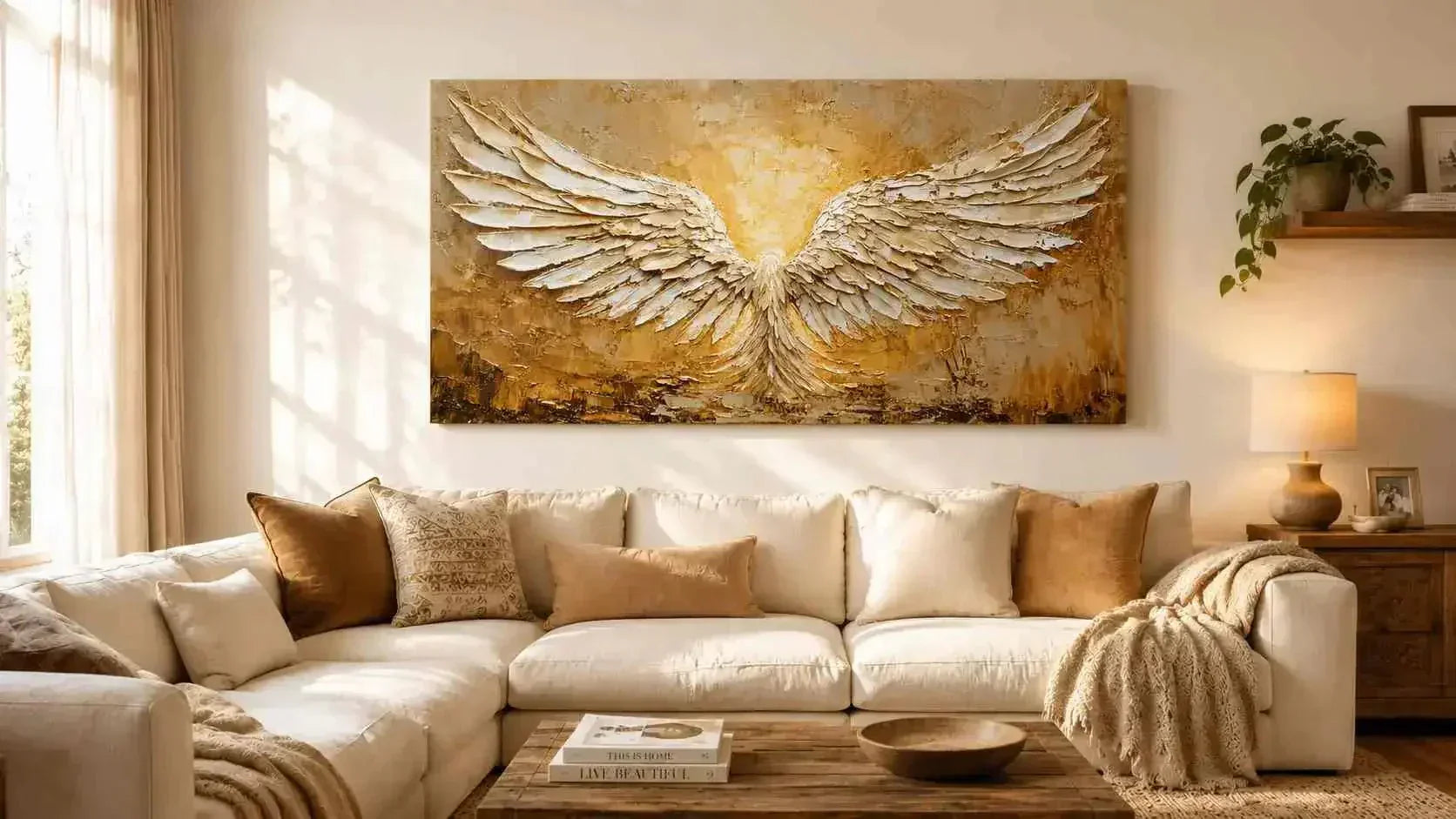
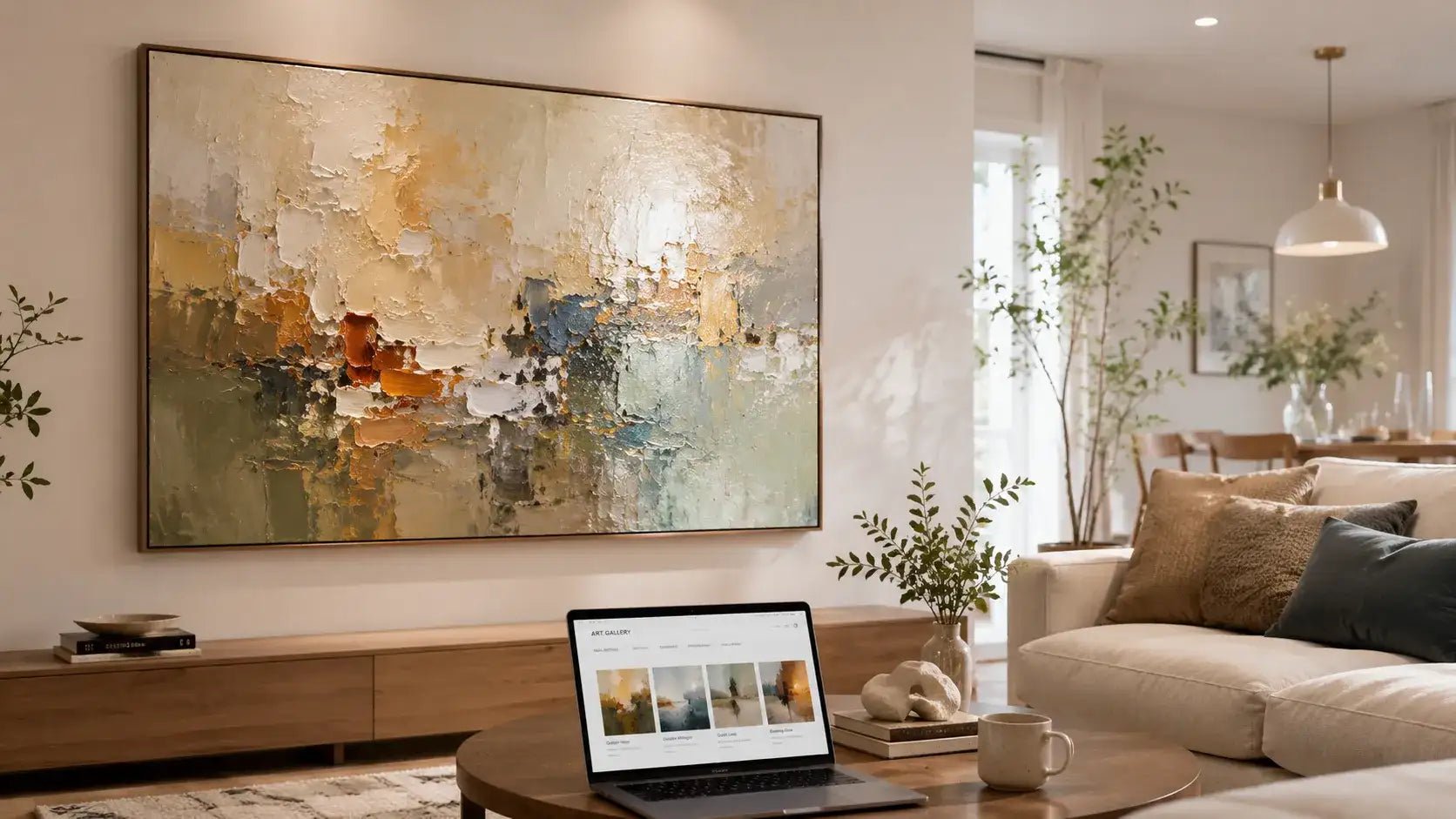
A bold, Colorful Art piece or textured Abstract Art can make a great focal point above the sofa.
Bedroom
-
Common moods: calm, soft, restful.
-
Modern Minimalist Art or gentle Wabi Sabi Art works beautifully here.
Home office
-
Common moods: clear, motivating, modern.
-
Clean-lined Modern Minimalist pieces or structured Abstract Art can keep the space feeling sharp without being distracting.
Dining area
-
Common moods: warm, inviting, conversational.
-
Texture Art or a refined, Colorful Art piece can make the room feel finished without overpowering it.
Use these as starting points, not strict rules. Your three words always come first.
Which Art Style Fits Your Mood? Texture, Minimalist, Colorful & More
Now connect your 3-word mood to specific styles of hand painted oil paintings like ours:
Texture Art
-
Feel: warm, dimensional, tactile.
-
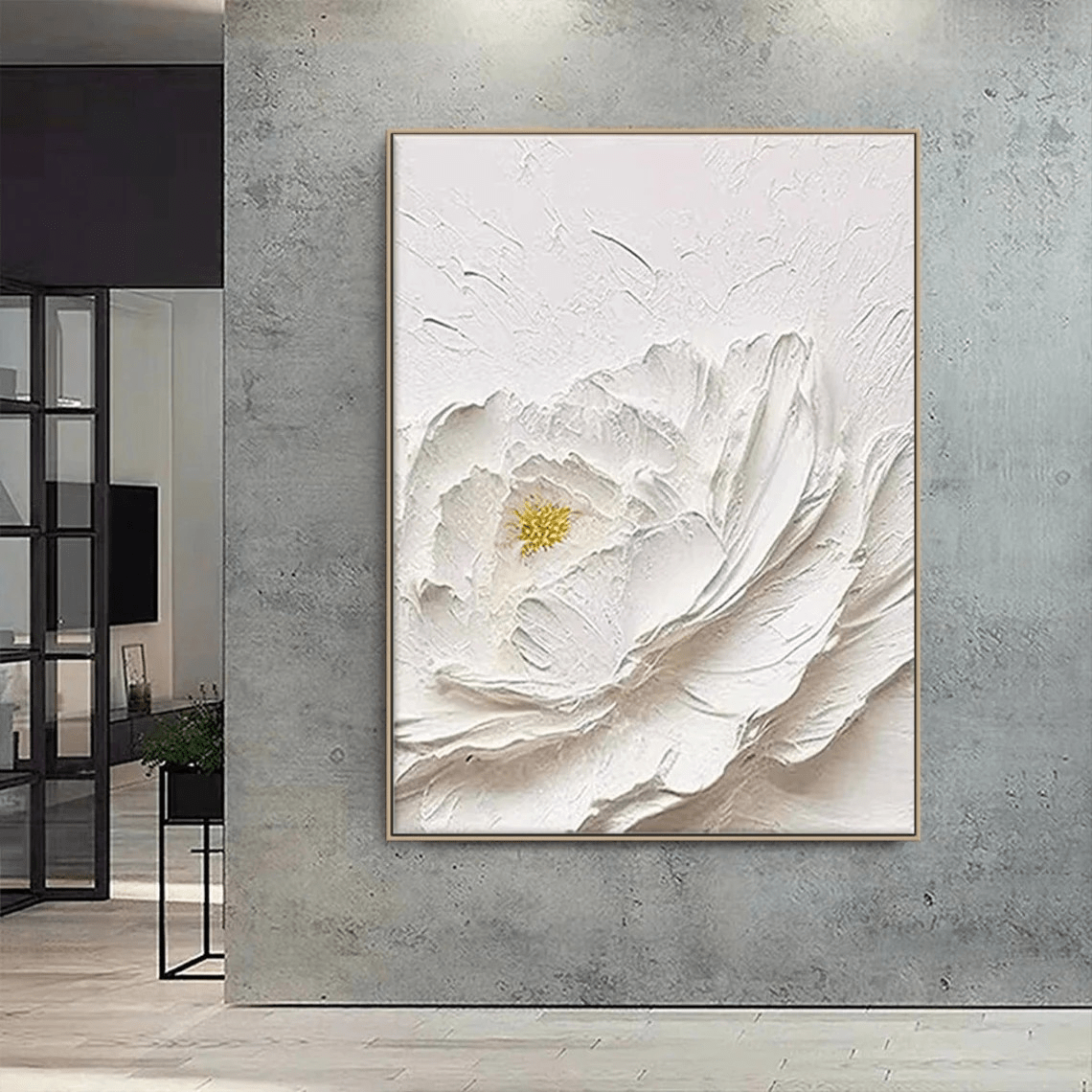
Great when you want the wall to feel cozy, inviting, or “expensive” without being loud. Texture catches the light and adds depth.
Modern Minimalist Art
-
Feel: calm, clean, uncluttered.
-
Ideal for bedrooms, modern living rooms, or offices that call for visual breathing room and a sleek look.
Colorful Art
-
Feel: bold, joyful, energetic.
-
Perfect if your room is mostly neutral and you want one piece to bring it to life.
Abstract Art
-
Feel: expressive, modern, flexible.
-
Work almost anywhere; you can choose softer or stronger colors depending on your mood.
Wabi Sabi Art
-
Feel: organic, imperfect, grounded.
-
Inspired by natural textures and the beauty of imperfection, great for cozy corners, reading nooks, or relaxed living rooms.
Custom Art
-
Feel: exactly what you want.
-
Best when you know your mood, colors, and size, but can’t find a ready-made painting. Custom hand painted art solves that.
How to Match New Art to Your Existing Furniture and Decor
Don’t start from a blank slate; start from your room.
A few quick rules:
-
Repeat one color: Choose a painting that includes a color already in your rug, pillows, or curtains.
-
Echo textures: If your space has natural wood, linen, or stone, Wabi Sabi or Texture Art will feel at home.
-
Complement the “temperature”:cool-toned rooms suit calm Modern Minimalist or Abstract Art; warm rooms love Wabi Sabi and textured work.
If you follow your three mood words and one of these rules, you’ll already be ahead of most first-time buyers.
Step 2 – Original vs Prints: How to Spot Real Hand-Painted Art Online
Section purpose: Explain key terms and help you recognize genuine hand painted paintings so you don’t get tricked by prints posing as originals.
Original Art vs Prints – Simple Definitions for Beginners
You’ll see a lot of terms online. Here’s what they usually mean:
Original art
A one-of-a-kind piece created by an artist’s hand. A hand painted oil painting on canvas is original when the artist actually painted that canvas.
Prints
copies of original art printed onto paper or canvas (poster prints, canvas prints, giclée).
Originals have real paint, real texture, and small variations. Prints are flat, and every copy looks identical.
Prints vs Original Paintings: Pros, Cons, and When Each Makes Sense
Both have their place:
Prints (including canvas prints)
Pros of Prints :
- Lower cost
- Easy to replace
- Good for temporary decor or very tight budgets
Cons of Prints :
- Flat surface, no real brushstrokes
- Not unique
- Colors can fade more quickly with cheap printing
Hand-painted originals (like our oil paintings)
Pros of Hand-painted originals :
- Real texture and depth
- One-of-a-kind or limited pieces
- Feel more “alive” and premium in a room
- Longer-lasting when well cared for
Cons of Hand-painted originals:
- Higher price than basic prints
- Slight variations are normal (because they’re painted by hand)
If you want a meaningful, long-term piece that makes your room feel finished, original hand painted art is usually worth it.
The Texture Test: How to Tell Real Paint from Flat Prints in Photos
When you’re browsing art online, zoom in on the photos.
Look for:
-
Visible brushstrokes that catch light differently
-
Small ridges or thickness where paint has been built up
-
Slightly uneven edges where paint overlaps
Be cautious if:
-
Everything looks perfectly flat, and there are no close-up or side-angle photos. Side-angle photos are especially helpful for spotting real hand painted texture.
How to Read Art Descriptions Like a Pro (and Spot Red Flags)
The product description should tell you clearly what you’re getting.
Good signs:
-
“Hand painted oil on canvas”
-
“Acrylic and oil mixed media, hand painted”
-
“Palette knife texture” or “impasto texture” (impasto means thick, textured paint)
Vague or suspicious signs:
-
“Canvas wall art” with no mention of hand painted
-
“Printed painting” (that’s usually a canvas print)
-
Lots of fancy adjectives but no clear materials or technique
If a listing never clearly says “hand painted” or “original,” assume it’s a print.
Simple Questions to Ask the Seller Before You Buy
If you’re unsure, send a quick message. A legitimate seller will answer clearly.
You can ask:
-
“Is this piece hand painted, or is it a print on canvas?”
-
“Can you confirm the medium? Is it oil on canvas?”
-
“Do you have close-up or side-angle photos showing the texture?”
-
“If I order two, will each one be individually painted?”
You don’t need to sound like an expert. Simple, direct questions are best.
Quick Reality Check: Is This Likely a Real Hand Painted Painting?
Use this mini checklist while browsing:
-
Does the description clearly say “hand painted” and specify the medium (like oil on canvas)
-
Are there close-up and angled photos showing real texture?
-
Is the price in a reasonable range for original art (not suspiciously low for a “large hand painted oil”)?
-
Does the seller answer questions and provide details when you ask?
If you can tick most of these boxes, you’re likely looking at a genuine hand painted painting, not a disguised print.
Step 3 – How to Choose the Right Size and Shape of Painting for Your Wall
Section purpose: Help you avoid the common mistake of buying art that’s too small or oddly proportioned for the space.
Simple Size Rules for Art Above Sofas, Beds, and Dining Tables
Art that’s too small is one of the biggest disappointments in real life. Use these general guidelines:
Above a sofa or bed
-
Aim for a painting that’s about 2/3 to 3/4 the width of the furniture, so your large size wall art for the living room feels balanced instead of too small or too overwhelming.
-
Example: If your sofa is 84" wide, look for art in the 56"– 64" range.
Above a console or low cabinet
-
Use the same 2/3 to 3/4 rule.
-
For a 60" console, a 40"– 45" wide hand painted oil painting works well.
Dining area
-
If hanging on a wall beside or behind a table, use the 2/3 rule as a starting point.
-
For a smaller dining corner, one strong medium-size hand painted piece can be enough.
These are guidelines, not strict laws, but they’ll keep you from going too small.
Visual Size Test: The Painter’s Tape Trick for Your Wall
Numbers can be hard to visualize. Try this:
-
Measure the space where you want the hand painted art.
-
Use painter’s tape to outline a rough rectangle in the size you’re considering.
-
Step back and look at it in daylight and evening light.
If the taped rectangle feels too small or too large, adjust its size before you buy. This works especially well when you’re thinking about large Texture Art or bold Colorful Art that will act as a focal point.
Orientation Basics: When Horizontal, Vertical, or Square Art Works Best
Orientation affects how the space feels:
-
Horizontal (landscape)Feels stable and calming; great over sofas, beds, or long consoles.
-
Vertical (portrait)Draws the eye up; good for narrow walls or between windows.
-
SquareBalanced and modern; works well in pairs or grids.
If you’re unsure, look at the shape of the wall and nearby furniture. Over wide furniture, horizontal usually feels more natural. In tight vertical spaces (like between two doors), vertical is often ideal.
When a Custom Size Painting Is the Smartest Option
Sometimes standard sizes don’t work:
-
Very tall ceilings where normal art looks “lost”
-
Narrow but tall walls
-
Spaces over a fireplace or staircase
-
Open-plan rooms with large empty walls
In these situations, Custom Art is often the smartest move. With custom hand painted pieces, you can:
-
Choose the exact width and height
-
Match specific colors already in your space
-
Decide on the orientation that works best
Custom doesn’t have to mean “overwhelming.” You can use your 3-word mood, your tape outline, and a few reference photos to guide the artist.
Step 4 – How to Check the Seller and Buy Original Art Safely Online
Section purpose: Give you a clear vetting process for websites and a simple plan for paying, shipping, and handling problems.
How to Spot Trustworthy Sites (and Avoid Art Scams Online)
Good signs when you buy original art online:
- Clear, well-lit photos (including close-ups)
- Detailed descriptions (materials, size, technique), an About page, real reviews,
- Secure “https” checkout
- Recognizable payment options
- Easy-to-find contact info
Be cautious if :
- Contact details are missing
- Descriptions are copied and vague
- Prices are extremely low for “huge hand painted oil paintings”
- Grammar is very poor across the site
Policies and Payment: Protect Yourself When You Buy Art Online
Before you pay, read the return, shipping, and damage policies: is there a clear return window, how long will shipping take, and what happens if a hand painted piece arrives damaged (especially Custom Art)?
Pay with credit cards or trusted services that offer buyer protection, and avoid risky methods like unknown wire transfers if a seller only accepts them and shows other red flags. Shop elsewhere.
Shipping, Unboxing, and What to Do If Something’s Wrong
Genuine hand painted oil paintings should be well wrapped, sometimes rolled or stretched on a frame, and shipping can take from several days to a couple of weeks, especially for made-to-order pieces.
When your painting arrives, check the box, then inspect the front, edges, and corners in natural light, compare it to the online photos, and make sure you see real brushstrokes and texture.
If there’s damage or it looks very different from the listing, take clear photos, contact the seller quickly with your order number and pictures, and, if needed, use your payment provider’s protection.
Step 5 – Living with Your Art: Easy Care, Placement, and Long-Term Value
Section purpose: Help you keep your painting looking great and reinforce why hand painted art is a strong long-term choice.
Simple Care Tips for Hand Painted Oil Paintings at Home
Hand painted oil paintings don’t need complicated care, just a bit of common sense.
Basics:
-
Avoid harsh sunlight.
-
Keep away from high humidity areas (like directly above a steamy shower).
-
Dust gently with a soft, dry cloth, no cleaning sprays or water.
-
Don’t lean the painted surface against sharp objects when moving it.
Treat it like a nice piece of furniture or a musical instrument: no extreme heat, cold, or moisture.
Hanging Height and Placement Made Easy
A common rule is to hang the center of the artwork about 57"– 60" from the floor, or about 8"– 10" above a sofa or console so it feels connected, not floating.
Give bold, Colorful Art or textured art enough space around it, instead of cramming it close to the ceiling.
Why Original Art Keeps Its Value as Your Style Changes
Cheap art prints often get replaced, but original hand painted pieces tend to stay because the real texture and handwork are satisfying to live with.
Each piece has a story, especially Custom Art created for your colors, size, or from your photos, and can move with you as your furniture and style change.
Quick Roadmap Recap and Checklist for Buying Original Art Online
Section purpose: Give you a skimmable summary to use while browsing and before you buy.
Before You Start Shopping for Original Art Online
-
Write down your 3-word mood for the room.
-
Note the room type (living room, bedroom, office, dining).
-
Measure your wall and the rough furniture width (sofa, bed, console).
-
Decide on a rough size range using the 2/3–3/4 rule.
-
Set a comfortable budget range.
While You’re Browsing Art Online
-
Filter by style that matches your mood (Texture, Modern Minimalist, Colorful, Abstract, Wabi Sabi, or Custom).
-
Confirm it’s hand painted (look for “oil on canvas”), zoom in on photos for real texture, and check size and orientation.
-
Scan the website for trust signals and clear policies.
Final Checks Before You Click “Buy”
-
Double-check the dimensions (height x width) and how it will sit over your furniture.
-
Confirm: original hand painted art, not a print.
-
Read the return, shipping, and damage policies.
-
Use a secure payment method and save your order confirmation and key screenshots.
Conclusion – Buy with Confidence and Make Your Space Truly Yours
You don’t have to be an art expert to start buying original art online without getting scammed. You just need a clear roadmap: decide how you want your room to feel, choose a style that matches, understand originals vs prints, pick the right size, check the seller, and take simple steps to buy and care for your painting.
Now, you can move from “nervous browser” to confident buyer. You know what real hand painted texture looks like, which questions to ask, how to avoid vague or misleading listings, and how to make sure that the painting actually fits your wall.
From here, you can:
-
Use your 3-word mood exercise and start browsing hand painted oil paintings by style in our online gallery —Texture, Modern Minimalist, Colorful, Abstract, or Wabi Sabi.
-
If your space has tricky dimensions or very specific colors, consider a Custom Art piece in your ideal size and palette.
When you finally hang that first original, hand painted painting and see real brushstrokes on your wall, you’ll be glad you chose something textured, personal, and made to last.
FAQ: Buying Original Art Online for the First Time
How do I know if a painting online is really hand painted and not a print?
Look for “hand-painted” and “oil on canvas” in the description, plus close-up and angled photos that show real texture and brushstrokes. If everything looks perfectly flat and vague, it’s probably a print.
Is it safe to buy expensive original art online?
Yes—if you vet the website, read reviews, check return and shipping policies, and pay with a secure method like a credit card. These steps give you protection if something goes wrong.
What size painting should I buy for above my sofa or bed?
A good rule is to choose a painting that’s about two-thirds to three-quarters the width of the furniture. For an 84" sofa, a piece around 56"– 64" wide usually looks balanced.