Oil Painting vs Print: How to Tell the Difference and Which Should You Buy?
You’ve found a blank wall that’s begging for art.
You start browsing online, and suddenly you’re drowning in options: canvas print, giclée, hand‑embellished, original oil painting.
The photos all look great on your screen.
The prices are all over the place.
And you’re left wondering: What’s the real difference between an oil painting and a print, and which should you actually buy for your home?
This guide is your practical, no‑jargon translator and decision tool.

Start Here: How to Decide Between an Oil Painting vs Print
Section purpose: Help you quickly clarify your goals, budget, and expectations so the rest of the guide leads to a clear “print vs oil vs mix” decision.
Before you compare technical details, it helps to get very clear on what you actually want your art to do in your space.

Statement Piece or Just Fill the Space? Decide the Art’s Job
Ask yourself:
- Is this wall the star of the room or just background?
- Will people sit near it and look at it often, or just walk past?
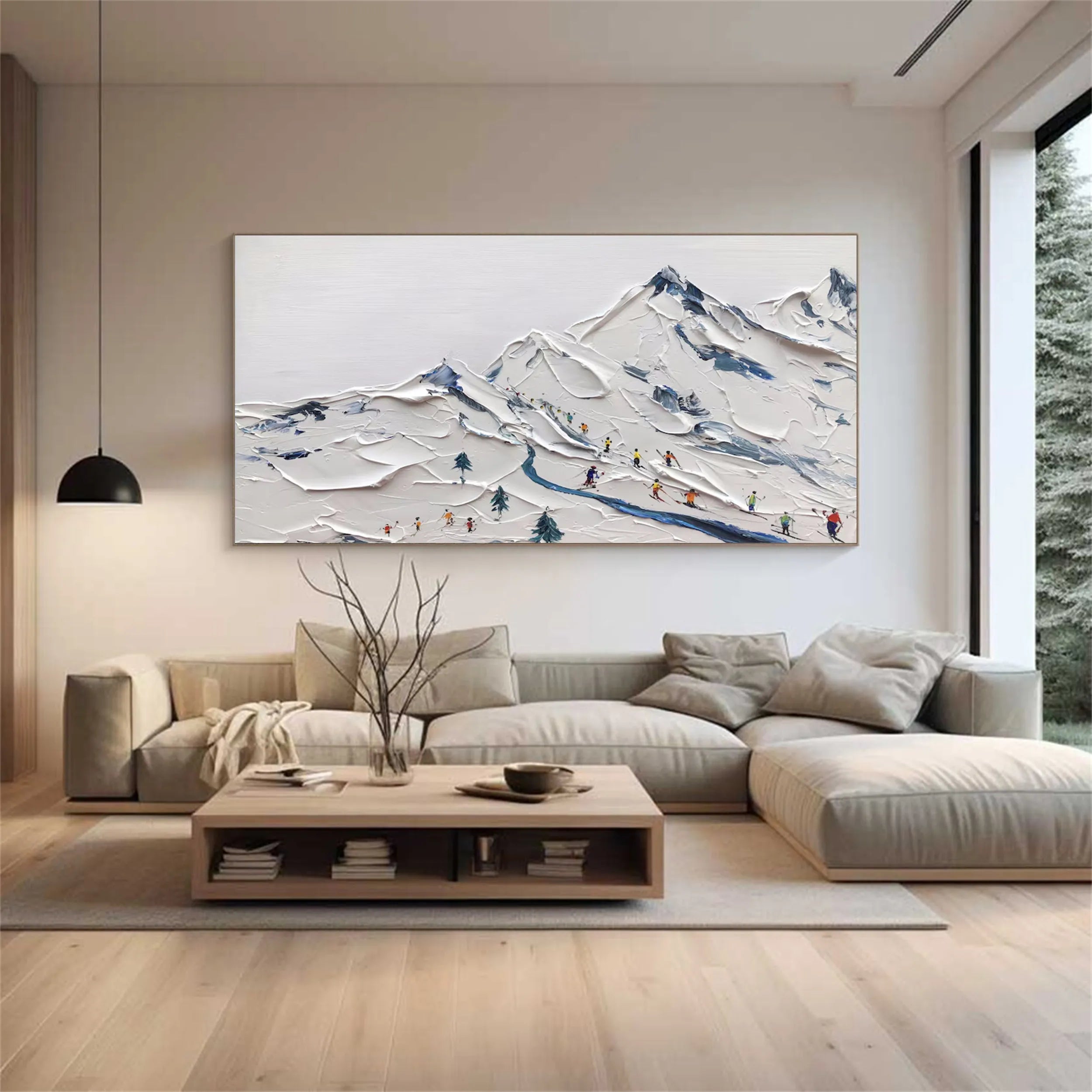
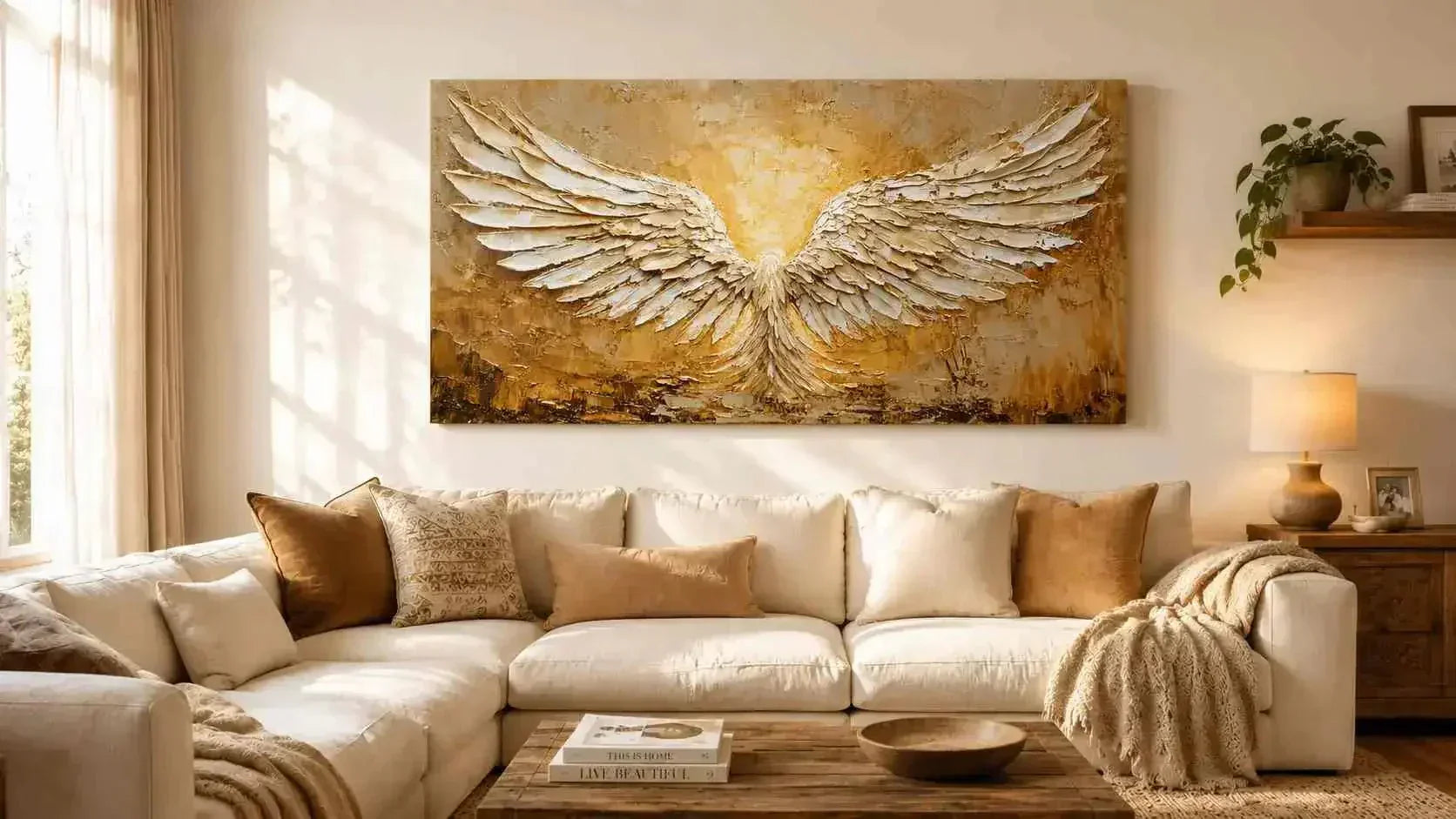
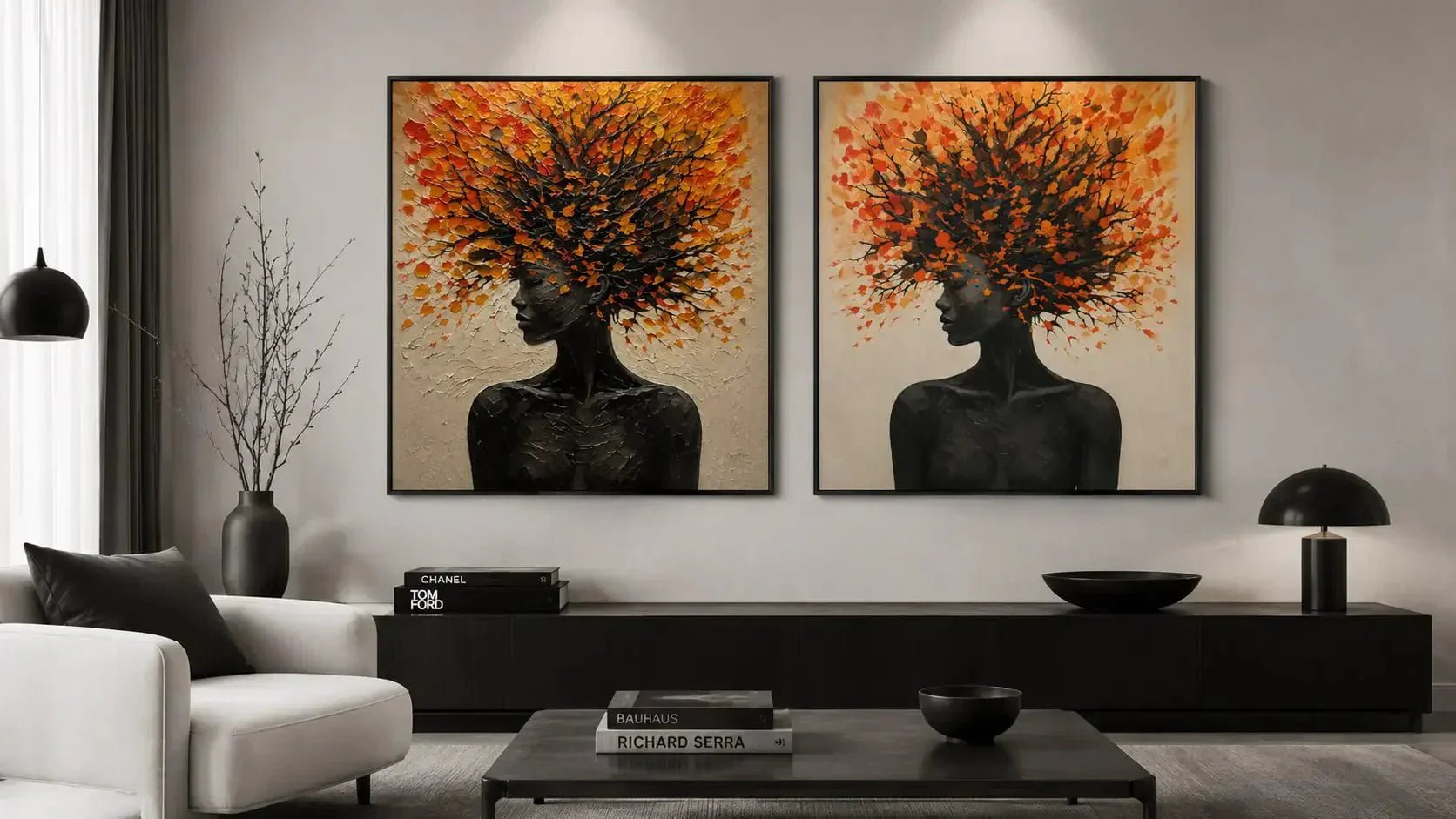
If you want a statement piece, something guests notice as soon as they walk in, texture, depth, and uniqueness matter a lot more.
That’s where hand‑painted oil paintings (especially Texture Art or bold Abstract Art) really shine.
Rule of thumb:
- Important wall people see and talk about → consider a hand‑painted oil.
- Secondary wall that needs something decent → a quality print can be enough.
Short-Term Decor or Long-Term Investment?
Think about the lifespan of the art:
- Decorating a rental or first apartment, you might live in 1–2 years?
- Furnishing a long‑term home you plan to enjoy for 5–10+ years?
If this is short‑term decor, prints can be a smart choice because they’re:
- Affordable
- Easy to swap out as your style changes
If this is art you imagine keeping for years or decades, investing in a hand‑painted oil painting can make more sense.
Oil paintings age well, can be re‑framed or moved to new homes, and don’t feel “disposable.”
How Much Do Texture and Uniqueness Matter to You?
Some people are happy with a beautiful image, printed flat.
Others really care about feeling brushstrokes and texture when they walk past.

Ask yourself:
- Do I love the idea of seeing real paint ridges and knife marks?
- Does “one‑of‑a‑kind” matter to me, or am I okay with something many people can buy?
If you’re drawn to the feel of real paint, styles like our Texture Art or Wabi Sabi Art (with soft, organic textures) are worth considering as hand‑painted oils rather than prints.
If you just need the right image and colors, and you don’t care about physical texture, a print can be perfectly satisfying.
Quick “If This, Then That” Rules: Print or Oil?
Use these quick scenarios to get an initial direction:
- If this is your main living room wall and you want guests to say “wow” → lean toward a hand‑painted oil painting (texture, abstract, or colorful).
- If this is a hallway or guest room and your budget is limited → lean toward prints.
- If you’re decorating your long‑term home office and will be on video calls → consider one strong hand‑painted piece behind you for a polished, professional backdrop.
- If you love changing decor often → favor prints, maybe with one or two core oil pieces you know you’ll always love.
Keep your answers in mind as you read the rest. They’ll make the later checklists much easier.
Oil Painting vs Print: Simple Definitions in Plain English
Section purpose: Remove jargon and confusion by explaining what oil paintings, canvas prints, giclées, and embellished prints are in everyday language.
Before you decide, it helps to know what these terms actually mean.
What Is a Hand‑Painted Oil Painting (and How Is It Made)?
A hand‑painted oil painting is created when an artist applies oil paint to a surface (usually canvas), layer by layer with brushes or palette knives.
Key points:
- Real, physical paint sits on the surface.
- You can see and feel texture and brushstrokes.
- Each piece is unique, even if the artist paints similar designs.
In our collections (like Texture Art, Modern Minimalist Art, and Abstract Art), every piece is painted by hand, so no two are exactly the same.
What Is a Canvas Print (and How Does It Compare)?
A canvas print starts as a digital image (a photo or a scan of art). That file is then printed onto canvas using a printer.
Think of it as:
- A high‑quality photograph printed on fabric instead of paper.
- No real texture from paint, any “brushstrokes” you see are just part of the printed image.
Canvas prints can still look nice, especially from a distance, but up close, they lack the depth and variation of hand‑painted oils.
Giclées, Posters & Hand‑Embellished Prints: What They Really Are
You’ll often see extra terms when you shop for wall art: giclée, poster, hand‑embellished.
They can sound fancy, but they all sit on the print side of the oil painting vs print decision.
Simple definitions:
Posters
- Lower‑cost prints on thinner paper
- Great for casual decor, kids’ rooms, dorms
- Least expensive, least durable
Giclée prints
- Higher‑quality inkjet prints on thick paper or canvas
- Better color and longevity than cheap posters
- Still reproductions, not original paintings
Hand‑embellished prints
- Start as a print (often a giclée)
- An artist adds some paint or texture on top in certain areas
- More texture than a regular print, but not fully hand‑painted
To keep it crystal clear when you’re asking yourself,
“Do I care about real texture and uniqueness?” Remember:
- Prints and giclées = reproductions
You’re buying a high‑quality copy of an image.
- Hand‑embellished = print + some paint
A print base with a bit of real paint added on top.
- Fully hand‑painted oil = maximum texture and uniqueness
Painted from start to finish by hand, with real brushstrokes and one‑of‑a‑kind details.
If you’re okay with a reproduction and just want a nice image, posters, giclées, and hand‑embellished prints can all work.
If you want the full experience of real, unique texture, you’re looking for a fully hand‑painted oil painting.
Oil Painting vs Print: How They Look and Feel in Your Home
Section purpose: Translate the technical differences into real‑world effects and give a clear pros/cons comparison.
Now let’s talk about how these choices actually look and feel in a room.
Texture and Brushstrokes: The Up‑Close Difference
With a hand‑painted oil:
- You’ll see raised paint, grooves, and edges where colors meet.
- Under light, you’ll notice subtle shadows and highlights from the texture.
With a print:
- The surface is flat.
- Any “brushstroke” you see is an image of a brushstroke, not real texture.
Color, Light, and Mood: How Oil Painting vs Print Changes a Room
Oil paints have a richness that often gives colors a soft glow and depth:
- Whites and creams in Wabi Sabi Art feel layered and organic.
- Bold hues in Colorful Art can look more vibrant and nuanced.
Prints can still have strong color, especially giclées, but they tend to feel more uniform and “flat.”
In a bright living room, a hand‑painted oil can change slightly with the light throughout the day, which makes the piece feel “alive.” A print will look more or less the same at all times.
Oil Painting Pros and Cons for Real Homes
Pros of hand‑painted oil paintings:
- Real texture and depth
- Unique—no one else has the exact same brushstrokes
- Often feel more premium or “gallery‑like.”
- Long‑lasting; can be moved to future homes
Cons of hand‑painted oil paintings:
- Higher price than mass‑produced prints
- Heavier, may require better hanging hardware
- Custom pieces may take time to create
For key walls and long‑term homes, many people find the extra cost worth it, especially in styles like Texture Art or Modern Minimalist Art where surface detail matters.
Print Pros and Cons for Everyday Decor
Pros of prints (canvas, giclée, posters):
- More affordable, especially for large sizes
- Easy to swap out as your taste changes
- Great for filling multiple walls quickly
Cons of prints (canvas, giclée, posters):
- Flat surface—no real brushstroke texture
- Often mass‑produced so that others may have the same image
- Cheaper materials can fade or warp faster
Quick Comparison Table: Oil Painting vs Canvas Print vs Giclée
|
Feature
|
Hand‑Painted Oil Painting | Canvas Print | Giclée Print |
| Surface | Textured, raised brushstrokes | Flat | Flat |
| Uniqueness | One‑of‑a‑kind | Mass‑produced | Mass‑produced |
| Look & feel | Rich, layered, “alive” | Good, but more uniform | High‑quality print look |
| Price range | $$–$$$$ (depending on size/artist) | $–$$ | $–$$$ |
| Best for | Focal walls, long‑term homes, “wow” rooms | Filling space, casual decor, rentals | When you want high‑end prints |
Use this as a quick reference as you think about each room in your home.
How to Tell If It’s Really Hand-Painted (Online and In Person)?
Section purpose: Give you an authenticity checklist so you don’t accidentally buy a print when you wanted a painting.
Many people have ordered what they thought was a “painting” and opened the box to find a flat print. Here’s how to avoid that.
What to Look For in Online Photos: Texture, Edges, Close-Ups
When shopping online, look for:
- Close‑up shots showing side angles: can you see raised paint?
- Edge photos: Do you see paint wrapping around the sides, or is the image perfectly flat?
- Detail shots: look for tiny irregularities—small variations are a good sign of hand‑painting.
If all the photos look very flat, or there are no close‑ups at all, be cautious if you’re specifically seeking a hand‑painted oil painting.
How to Read Product Descriptions and Avoid Confusion?
Key phrases to look for:
- “Hand‑painted oil painting” or “original hand‑painted artwork” → good signs.
- “Printed on canvas,” “high‑resolution print,” “giclée print” → these are prints.
- “Hand‑embellished print,” “painted details on a printed base” → hybrid, but not fully painted.
If a listing uses only vague terms like “canvas art” or “wall art” without clearly saying “hand‑painted,” assume it might be a print.
In our own descriptions, we explicitly say hand‑painted oil and call out texture and brushwork so there’s no confusion.
In‑Person Checks: Simple Ways to Tell Print vs Painting
If you’re in a store or gallery:
- Step to the side and catch the light across the surface. Do you see raised paint and texture shadows?
- Gently look along the edge: is there paint thickness on the sides?
- Look for tiny imperfections, a slight wobble in a line, uneven paint; these are signs of a human hand.
A print will look very smooth and uniform, with no real thickness to the image.
Red Flags: When a “Painting” Is Really a Mass‑Produced Print
Be cautious if:
- The price seems too low for a “large, hand‑painted oil” (for example, a huge piece for under $50).
- The seller uses stock‑style photos with no close‑ups of the actual item.
- The description is vague and avoids clear words like “print” or “hand‑painted.”
When in doubt, ask the seller directly:
“Is this a fully hand‑painted oil painting, or a print on canvas?”
When a Print Is Enough vs When a Hand‑Painted Oil Matters
Section purpose: Use practical scenarios and budget‑aware advice so you know where to save with prints and where to invest in oils.
You don’t have to choose all prints or all paintings. The smartest approach is often a mix.
High‑Impact Walls: Where Hand‑Painted Oils Are Worth It
These are spots where a hand‑painted oil can transform the room:
- Above the living room sofa
- Over the bed in the primary bedroom
- In the entryway where guests first walk in
- Behind your chair in a home office (your video call background)
On these walls, a textured oil, like a bold Abstract Art piece or calm Modern Minimalist Art, can instantly make the whole room feel more considered and high‑end.
If your budget is limited, prioritize a hand‑painted oil painting for one of these walls.
Low‑Risk Areas: Where Good Prints Are Perfectly Fine
Prints are great for:
- Hallways and stairwells
- Guest bedrooms
- Kids’ rooms or playrooms
- Rental properties or short‑term living situations
In these spaces, you might prefer flexibility and lower cost over long‑term investment. A nicely framed, colorful print or minimalist print can still look stylish without the commitment.
How to Build a Smart Mix of Oil Paintings and Prints?
A balanced approach could look like:
-
1–2 hand‑painted statement pieces for your most important walls
- For example, a textured neutral piece in the living room + a colorful abstract in the dining room
- Prints for secondary rooms and corridors
This way, you get the wow factor and the tactile experience of real paint where it matters most, while still respecting your budget.
Budget Tips: How Much to Spend on Oil vs Print
Everyone’s budget is different, but here’s a simple framework:
Spend more (a larger share of your art budget) on:
- Main living area
- Primary bedroom
- Home office backdrop
Spend less on:
- Hallways
- Secondary bedrooms
- Spaces you might redecorate soon
If you’re able, consider allocating enough for at least one quality hand‑painted oil painting in a key space, and fill in other areas with well‑chosen prints.
Style, Color, Size – How Hand‑Painted Art Fits Your Space
Section purpose: Help you pick art that looks intentional and cohesive, while introducing key hand‑painted styles and where they fit best.
Once you know what type of art you want, you still need to choose size, color, and style.
Get the Size Right: Simple Rules So Your Art Doesn’t Look Too Small
Undersized art is one of the most common decor mistakes.

Simple guidelines:
- Above a sofa or bed, aim for 60–80% of the furniture width.
- Leave roughly 6–10 inches of space between the top of the furniture and the bottom of the art.
- On a blank wall, larger pieces generally look more intentional than several tiny ones.
For example, if your sofa is 80 inches wide, a painting around 48–64 inches wide will usually feel balanced.
With hand‑painted oils, going a bit bigger can really show off the texture and brushwork, especially in Texture Art and Abstract Art.
Color and Mood: Choose Art That Works With Your Room
Think about how you want the room to feel:
- Calm and restful?
- Energetic and lively?
For a calm and restful space:
- Choose soft neutrals, muted blues, or warm earth tones.
- Styles like Modern Minimalist Art or Wabi Sabi Art work beautifully here.
For an energetic and lively space:
- Go for Colorful Art with bolder hues.
- These can brighten up neutral rooms and reflect your personality.
Practical tips:
- If your furniture and walls are neutral, your art can safely be more colorful.
- If your room already has lots of patterns and colors, a more minimal or subtle piece will keep things from feeling busy.
Texture Art: Add Depth and a Gallery Feel to Key Walls
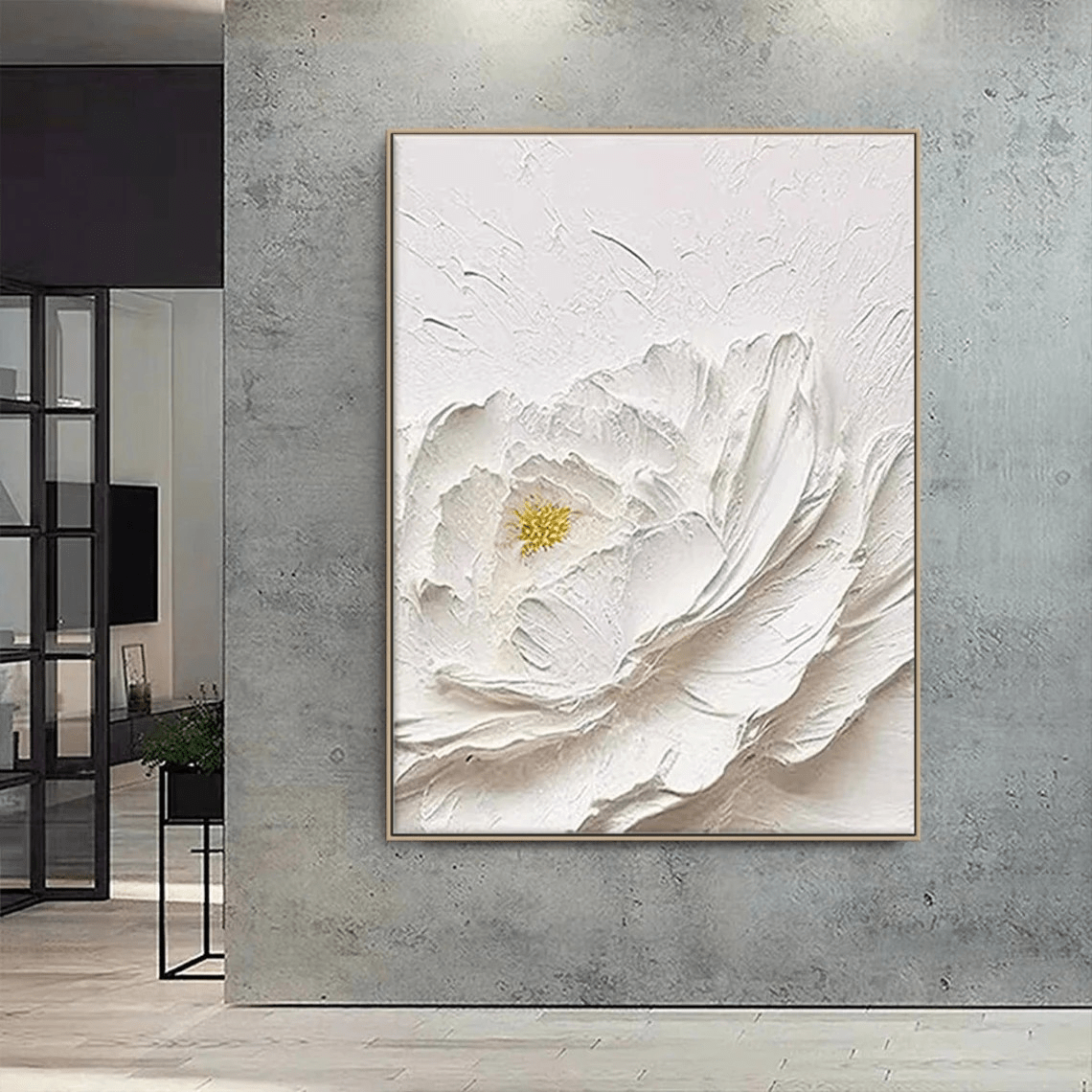
Texture Art uses thicker layers of paint to build up the surface.
In person, you’ll see ridges and shapes that catch the light.
Best for:
- Living rooms where you want a sophisticated focal point
- Dining areas that need a bit of drama without loud colors
- Entryways that you want to feel like a mini gallery
Texture Art is a style where being hand‑painted really matters; the whole point is the physical texture.
Modern Minimalist Art: Clean and Calm for Bedrooms and Offices
Modern Minimalist Art focuses on simple shapes, limited color palettes, and calm compositions.
Works well in:
- Bedrooms where you want a peaceful atmosphere
- Home offices where you need a clean, professional backdrop
- Spaces with modern or Scandinavian‑style furniture
Hand‑painted minimalist pieces may look simple at first glance, but up close, you’ll see subtle brushwork and layers that prints often flatten out.
Colorful Art: Bring Energy and Personality Into Neutral Rooms
Colorful Art can do a lot of heavy lifting in neutral spaces:
- A bold, hand‑painted piece above a beige sofa instantly livens the room.
- In a white kitchen or dining area, a colorful abstract can add warmth and fun.
If you love color but worry about committing to bright furniture, colorful hand‑painted art is a great way to add personality in a way that’s easy to move or replace if your taste evolves.
Abstract Art: Flexible and Easy to Match Different Decor Styles
Abstract Art focuses on shapes, colors, and movement rather than specific subjects.
Why it’s practical:
- It can fit with many decor styles, from modern to transitional to even some traditional spaces.
- You don’t have to worry about “Do I really want a giant picture of X on my wall?”—it’s more about mood.
Hand‑painted abstract oils often feel more luxurious than printed ones because the layered paint adds depth and interest.
Wabi Sabi Art: Soft, Organic Art for Cozy, Relaxed Spaces
Wabi Sabi Art embraces natural, imperfect textures and soft, earthy colors.
It’s ideal for:
- Bedrooms and reading corners
- Living rooms where you want a cozy, grounded feeling
- Spaces where you favor natural materials (wood, linen, stone)
In hand‑painted form, subtle ridges, washes, and irregularities add a quiet richness that suits calm, lived‑in spaces.
Custom Art: Perfect Size, Color, or a Painting From Your Photo
Sometimes you know exactly what you need:
- A very specific size over your fireplace
- Colors that match your rug or sofa fabric
- A painting based on a meaningful photo (a landscape, your pet, a special moment)
Custom Art lets you:
- Choose size and orientation to fit tricky walls
- Adjust color intensity (so it doesn’t clash with your room)
- Turn personal photos into hand‑painted oil paintings, giving them a timeless, tactile feel
If you’re struggling to find “just the right thing,” a custom hand‑painted piece can solve the problem and feel extra meaningful.
Common Wall Art Mistakes (and How to Avoid Them)
Section purpose: Address typical regrets and pitfalls so your final choice feels smart and satisfying.
Learning from other people’s mistakes can save you time and money.
Mistake: Letting Price Alone Decide Everything
It’s natural to be price‑conscious, but if you choose the cheapest option for your most important wall, you may end up:
- Replacing it soon because it doesn’t feel special
- Feeling like the room never quite looks “finished.”
You don’t need to overspend, but it’s worth asking:
“Is this a wall where a slightly higher investment in a hand‑painted oil would make the whole room feel better?”
Sometimes, one carefully chosen painting is better than several inexpensive prints that don’t really excite you.
Mistake: Choosing Art That’s Too Small
Art that’s too small can make a room feel oddly empty, even if the piece itself is nice.
To avoid this:
- Follow the 60–80% width rule above furniture.
- When in doubt between two sizes, go larger (especially with abstract or minimalist work).
A well‑sized hand‑painted piece, whether minimalist or colorful, tends to look more intentional and “designer.”
Mistake: Expecting Texture but Buying a Print
One of the biggest disappointments:
You expect visible brushstrokes, but you receive a completely flat print.
Always:
- Read the description carefully for “print” vs “hand‑painted.”
- Look for close‑up photos
- Ask the seller if it’s not crystal clear
If you specifically want to see and feel real paint, make sure the listing clearly states that it’s a hand‑painted oil painting.
Mistake: Ignoring How You Actually Use the Room
Art should fit how you live:
- A very busy, high‑contrast piece in a tiny bedroom may feel overwhelming.
- Something extremely muted in a lively family room might disappear.
Match energy level to room function:
- Calm rooms (bedrooms, reading nooks) → Modern Minimalist Art, Wabi Sabi Art, softer Abstract Art.
- Active rooms (living rooms, dining rooms, offices) → bolder Colorful Art or Abstract Art, or strong Texture Art pieces.
Final Checklist Before You Buy: Oil Painting vs Print
Section purpose: Condense everything into a quick pre‑purchase checklist and end with reassurance about choosing the right balance of prints and hand‑painted oils.
Before you click “buy,” run through this short list.
7 Key Questions to Answer Before You Click “Buy.”
Which room and wall is this for?
- Focal wall or secondary space?
How long do I plan to keep this piece?
- A couple of years or long‑term?
Do I care about real texture and brushstrokes for this spot?
- Yes → consider a hand‑painted oil painting.
- Not really → print is fine.
What’s my realistic budget for this wall?
- Enough for a statement painting, or better suited to a good print?
Is the size appropriate (especially above furniture)?
- Around 60–80% of the furniture width?
Does the style and color match the mood I want in this room?
- Calm, cozy, energetic, modern, natural?
Does the product clearly state what it is (print vs hand‑painted)?
- If not, ask or look elsewhere.
If most of your answers point to “important wall + long‑term + love texture + can invest a bit more,” a hand‑painted oil painting, maybe in Texture, Modern Minimalist, Abstract, or Wabi Sabi style, is likely the better choice.
If they point to “secondary wall + short‑term + just need color + tight budget,” then a print is the practical answer.
Example Scenarios: When to Choose Print, Oil, or a Mix
First apartment, decorating on a budget:
- Mix: one mid‑sized hand‑painted abstract above the sofa, prints in the bedroom, and hallway.
Family home, main living room you use every day:
- Invest: a larger Texture Art or Wabi Sabi Art piece as a focal point, maybe paired with smaller prints elsewhere.
Home office where you’re on video calls all day:
- Choose: a hand‑painted Modern Minimalist or Abstract Art piece behind your chair to create a clean, polished background.
Choosing Art You’ll Be Happy to See Every Day
In the end, the goal isn’t to memorize art jargon, it’s to choose pieces you’ll be glad to see every time you walk into the room.
For many people, that means:
- Investing in one or two hand‑painted oil paintings for important walls, in styles that fit their personality and space.
- Using prints smartly for secondary areas, kids’ rooms, or spaces they’ll likely update soon.
- Considering Custom Art when they need a perfect size, color palette, or a meaningful subject turned into a painting.
From textured statement pieces to calm Wabi Sabi canvases and custom oils from your own photos, you have plenty of options.
Use the checklists and rules in this guide, trust your taste, and choose what feels right for your home, not just on your screen, but in real life.
FAQ: Oil Painting vs Print
1. Is an oil painting really worth more than a print
Yes. A hand-painted oil painting offers real texture, depth, and uniqueness, so it usually feels more special and lasts longer than a mass-produced print.
2. How can you tell if a painting is original or just a canvas print?
Look for raised brushstrokes, paint on the edges, and close-up photos. If the surface is completely flat and described as “printed on canvas,” it’s a print.
3. Are giclée prints as good as original oil paintings?
Giclée prints are high-quality reproductions with good color, but they’re still flat images. They don’t have the tactile texture and one-of-a-kind feel of an original oil painting.
4. When should I choose a print instead of an oil painting?
Choose a print for secondary spaces, rentals, kids’ rooms, or when you want affordable art you can easily swap out as your style changes.
5. Can I turn my own photo into a hand-painted oil painting?
Yes. With custom art, an artist can use your photo as a reference to create a hand-painted oil painting in the exact size and colors you need.